


Description
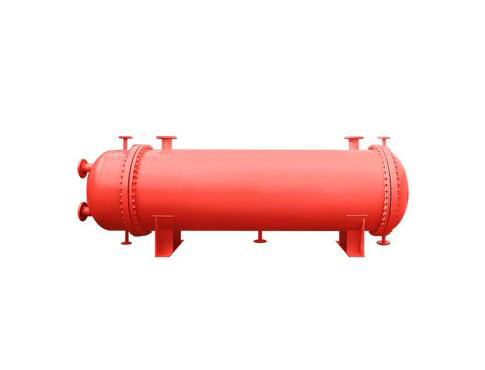
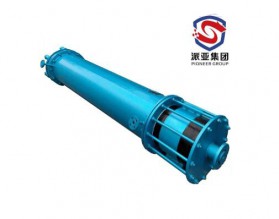
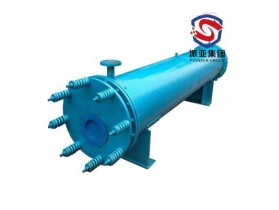
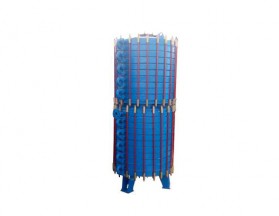
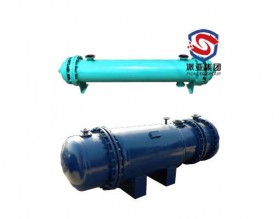
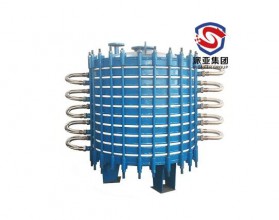
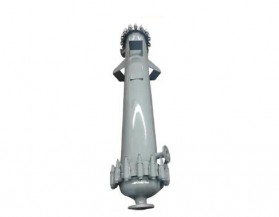
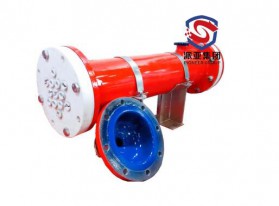
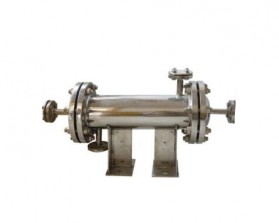
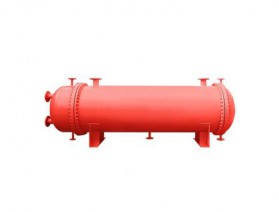
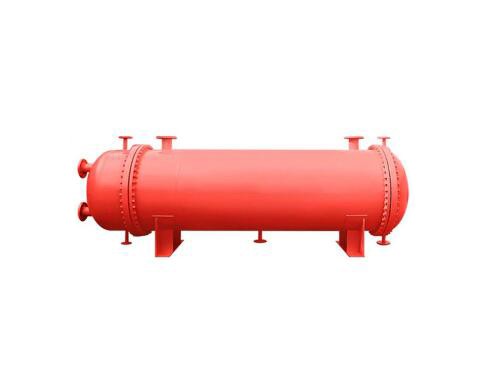
Titanium or titanium alloy shell and tube heat exchanger is a heat exchange equipment made by high-quality titanium or titanium alloy tube bundle as heat transfer parts to trans the heat from the hot fluid to the cold fluid. Due to the various excellent properties of titanium, titanium heat exchangers are widely used in various seafood aquaculture, seawater heat exchange, salt water heat exchange, chemical industry, food, medicine, metallurgy, refrigeration, light industry, electroplating industry, aluminum oxidation tank, salt, paper, ultrasonic, electronic communications, central heating and other industries and fields.
Titanium or titanium alloy shell and tube heat exchanger can be widely used in organic compounds, alkaline solutions, salt solutions and other media, not easy to react with them, and has excellent corrosion resistance of them.
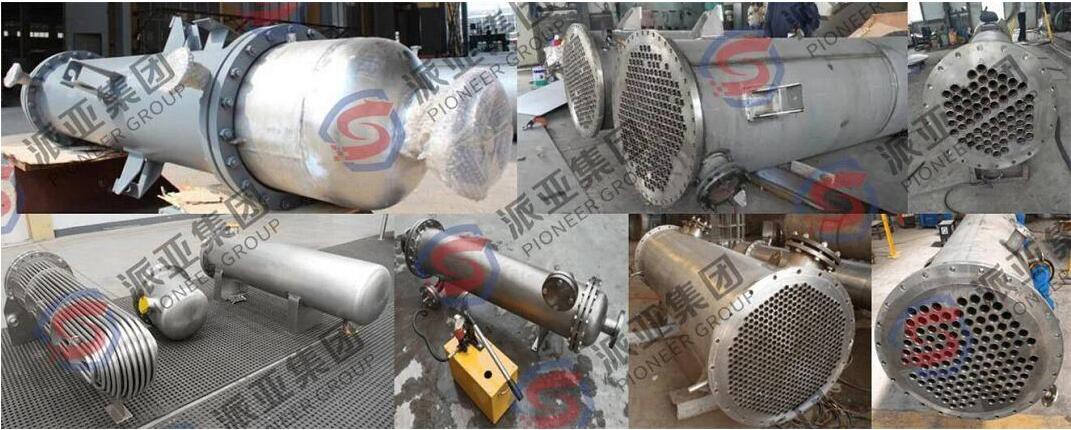
Like other tube-shell type heat exchanger, the sturcture of titanium shell and tube heat exchanger included fixed tube plate type, U-tube type and float-head type. Because of titanium or titanium alloy has high specific strength, so the weight of titanium or titanium alloy shell and tube heat exchange is lighter than other material.
Model TA1,TA2,TA3 are commonly use pure titanium and Model TA9, TA9-1, TA10 are titanium alloy for titanium shell and tube heat exchanger.
PRODUCT SPECIFICATION
|
Heat Exchange Area |
0.5 to 100 m2 |
|
Designed Pressure |
Shell site: -0.1-1.6 Mpa; Tube site: 0 - 1.0 Mpa |
|
Designed Temperature |
-60 to 230 ℃ (Pure-Ti) |
|
Gasket |
PTFE or PTFE+CAF+Corrugated SST304( No Asbestos ) |
|
Hydraulic Test |
1.5 times designed pressure for jacket & vessel |
|
Design Standard |
GB/T151-2014,TSG21-2016/XG1-2020, JB/T4745-2002 ; |
|
Nozzle & Flange Standard |
HG/T(GB), ASME, JIS, DIN (Optional) |
CAUTION
Titanium and titanium alloy vessel should be avoided or used with caution for the fuming nitric acid, dry chlorine, methanol, ethanol, trichloroethylene, liquid nitrogen tetroxide, molten metal salt, carbon tetroxide, urinary pyridine, oxygen, bromine vapor, because titanium will cause combustion, explosion or stress corrosion by contact with the above media under certain conditions.
Also, titanium will burn in pure oxygen with temperature over 500 ℃ or air with temperature over 1200 ℃, so titanium vessel should not be exposed to flame when it exposed to air and oxygen.
Titanium and iron ions can cause galvanic corrosion, and sometimes lead to cathodic hydrogen evolution of titanium, resulting in local hydrogen embrittlement of the vessel. Therefore, the titanium vessel should avoid iron ion and hydrogen pollution during the manufacturing and operating.
Titanium or titanium alloy vessel has not good corrosion resistant property in some media, such as hydrofluoric acid, fluorosilicic acid, hydrochloric acid with concentration higher than 3%, fuming nitric acid, sulfuric acid with concentration higher than 4%, non aerated boiling formic acid, etc.
The use temperature shall be lower than 93 ℃ by titanium or titanium alloy vessel use with caustic soda and other high concentration alkaline solutions.
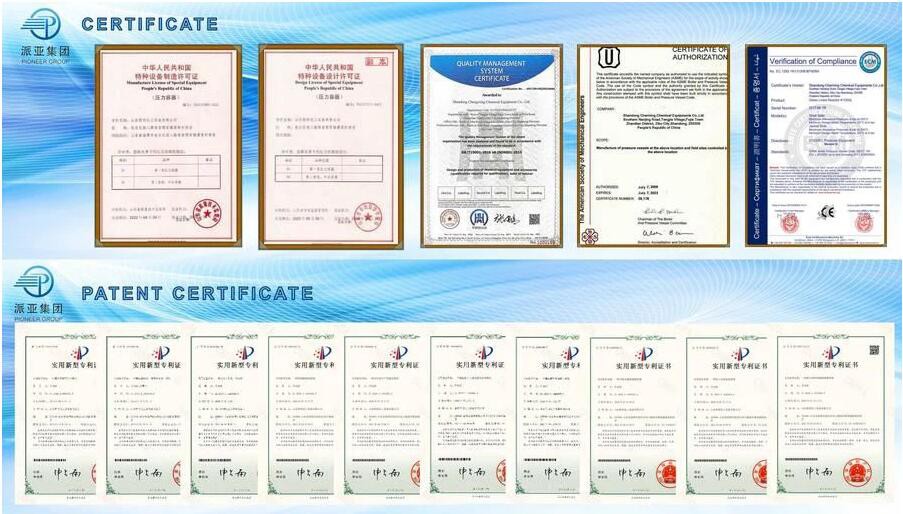
CONTACTCERTIFICATE
OUR PARTNER

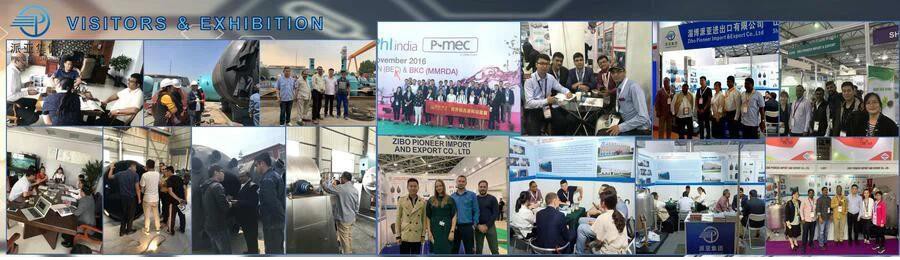
VISITORS AND EXHIBITION
FAQ
 E-mail:info@cmchemical.net
 Tel:182-6588-8777
 Address: Room 804, Huaxia International Building, No.96 Liuquan Road, Zhangdian District, Zibo City, Shandong Province, P.R.China.
Shandong PIONEER Heavy Industry Technofogy Co., Ltd.
 E-mail:
 Tel:
Tel: